College
It’s real. It’s us. It’s bad. There’s hope.
SENCER Conference promotes science literacy while cultivating empathy, community and agency
When award-winning journalist Katie Worth began reporting on climate change for Frontline PBS, she and her colleagues had an unusual amount of freedom. “We could go anywhere in the world—we just needed to tell a story about climate change,” she said. They chose the Marshall Islands, where rising seas already threaten homes, schools and livelihoods. The project, The Last Generation, followed young students living at the front lines of a crisis they could see outside their classroom windows.
Those children’s understanding of the climate crisis—remarkably informed for their age—sparked a critical question for Worth: What would they learn about climate change if they moved to the United States?
That question became the foundation of Worth’s investigative work into how climate change is taught—or avoided—in American classrooms. She found that while nearly all climate scientists agree humans are responsible for global warming, two-thirds of U.S. science teachers present the topic as a debate. Some educators even teach that the phenomenon is natural, reflecting the political and ideological pressures shaping curriculum decisions at the local and state levels.
“It’s hard to know what’s happening behind every classroom door,” Worth said, “but surveys show most teachers spend only a few hours a year on climate change, and not all of what they teach is scientifically accurate.”
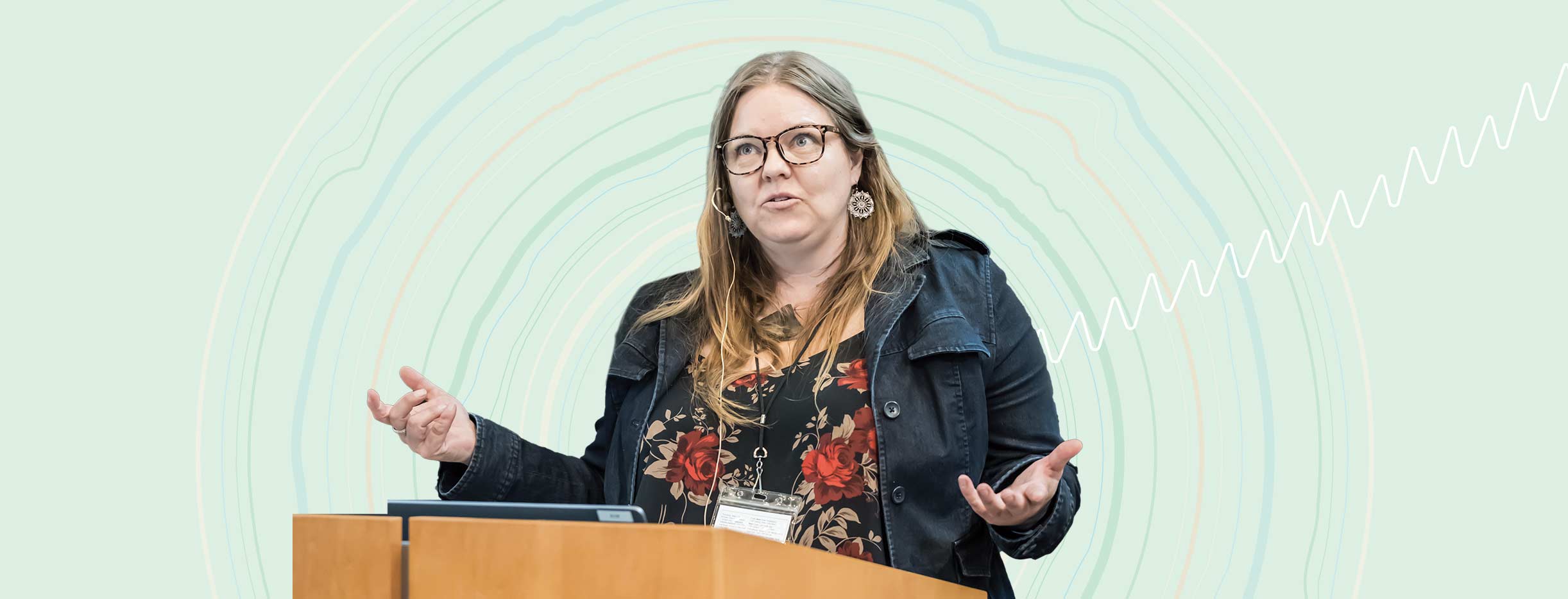
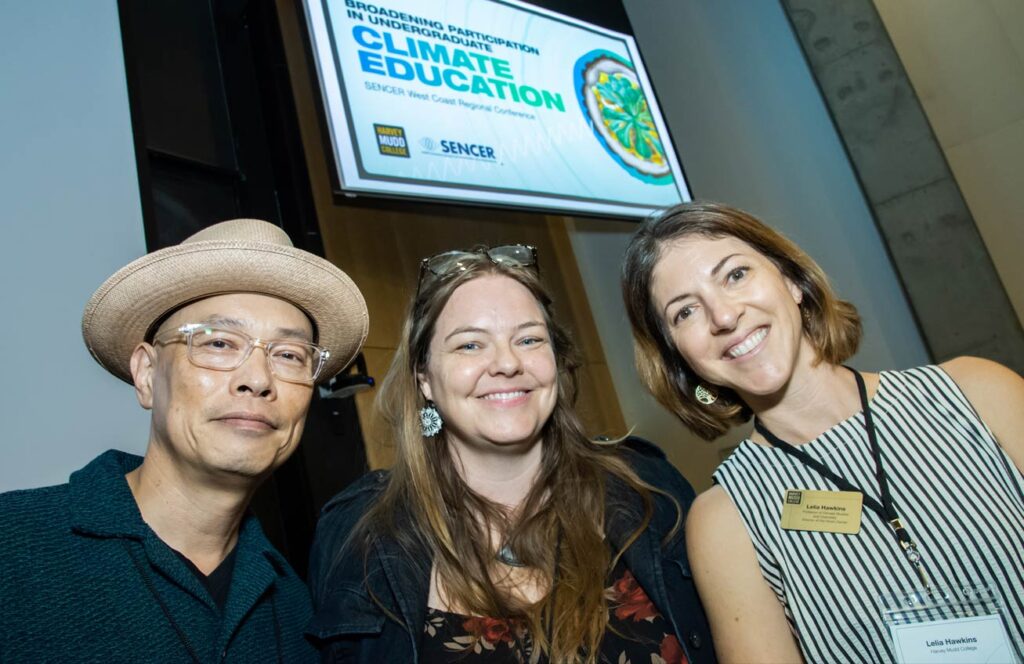
Worth shared these insights as a keynote speaker at the SENCER West Coast Regional Conference: Broadening Participation in Undergraduate Climate Education, held Sept. 18–19, on campus. Organized by HMC’s Hixon Center for Climate and the Environment and the Office of Civic and Community Engagement, the conference brought together educators, researchers and community leaders to explore how inclusive approaches can strengthen climate teaching and learning. Worth’s talk, “Censoring the Future: How Climate Change is Taught in America,” encouraged participants to look critically at the systems that shape students’ understanding of climate change. She traced decades of efforts by fossil fuel companies to influence K–12 education through industry-sponsored materials and classroom resources, from the 1950s “Magic Barrel” presentation to today’s fossil fuel–funded curricula still used in states like Oklahoma and Texas.
Chemistry Lelia Hawkins
She also highlighted teachers who resist misinformation, including those who create safe, evidence-based spaces for students to discuss a crisis that affects their daily lives. “There are incredible educators everywhere who teach this topic carefully, compassionately and with hope,” she said. “They are helping the next generation see that climate change is real, it’s us, it’s bad—but there’s hope,” she said.
That sense of hope and community action echoed throughout the conference. Alongside Worth’s presentation, UC San Diego Muir College Provost K. Wayne Yang spoke about the launch of a UCSD-wide climate change graduation requirement, while Krista Hiser, professor of composition and rhetoric at Kapi‘olani Community College, led two interactive workshops focused on climate anxiety and empowerment.
Faculty, staff and students from across the region presented research in three key areas: institutional change; the humanities, social sciences and the arts; and civic and community engagement. Poster sessions and breaks between panels gave attendees opportunities to share strategies for integrating climate learning across disciplines and institutions.
Worth concluded her keynote by returning to the children she met in the Marshall Islands and later, in Paradise, California, where she reported on students rebuilding their education after wildfires destroyed their town. In both places, she said, young people were grappling with climate change not as an abstract issue but as a lived reality.
“What gives me hope,” she said, “is watching students and teachers confront this crisis together with curiosity, with courage and with care. Education has the power to plant seeds that will grow into solutions we can’t yet imagine.”
The SENCER West Coast Regional Conference showcased how educators across disciplines can work together to rewrite the narrative and, in doing so, help students imagine and create a more sustainable future.