Community
Innovation Accelerator Labs are Redefining Progress
Through a suite of innovation Accelerator Labs, the College is transforming how students interact with data, health artificial intelligence and the Core Curriculum, expanding from “what can we build?” to “whom does this serve?”
Data as a Tool for Justice
The Data Science and Social Impact Lab concluded its work during spring 2026. At its DIoDS (Driving the Impact of Data Science) Conference in February, guest speaker Nathan Alexander (Howard University) drew upon the legacy of American writer and civil rights icon James Baldwin and challenged the community with a question: “How much data do you want for your progress?” This philosophy anchored the conference, where industry leaders and academics explored how to harness data toward sustainable, equitable action. Joseph Robertson (Mato Ohitika Analytics) shared his work on “Data Sovereignty,” showing students how to ethically bridge indigenous culture with modern data science to identify harms in technological systems. David Uminsky ’03 described how the University of Chicago Data Science Institute—which he leads—is applying the HMC Clinic model to build bridges between data scientists and their communities. The lab’s commitment to “data-to-doing” was further reflected in the spring 2026 Datathon, in which student teams competed to visualize complex trends in global health and nutrition, turning raw numbers into compelling narratives for change.
Engineering for Human Health
In the Emerging Health Technologies (EHT) Lab, the focus is on leveraging the interdisciplinary foundation of a Mudd education to address pressing challenges in biomedical research and development. This spring, the lab hosted a series of industry experts from companies like Novartis and Roche, exploring how data science drives drug discovery and how physics shapes sequencing development. The EHT Lab is also a powerhouse for career longevity, fostering a robust alumni networking hub and placing students in high-impact summer internships at companies led by HMC alumni. The lab seeks to ensure Mudders are ready to lead in the biotech and pharmaceutical sectors.
The AI Frontier: Reimagining the Classroom
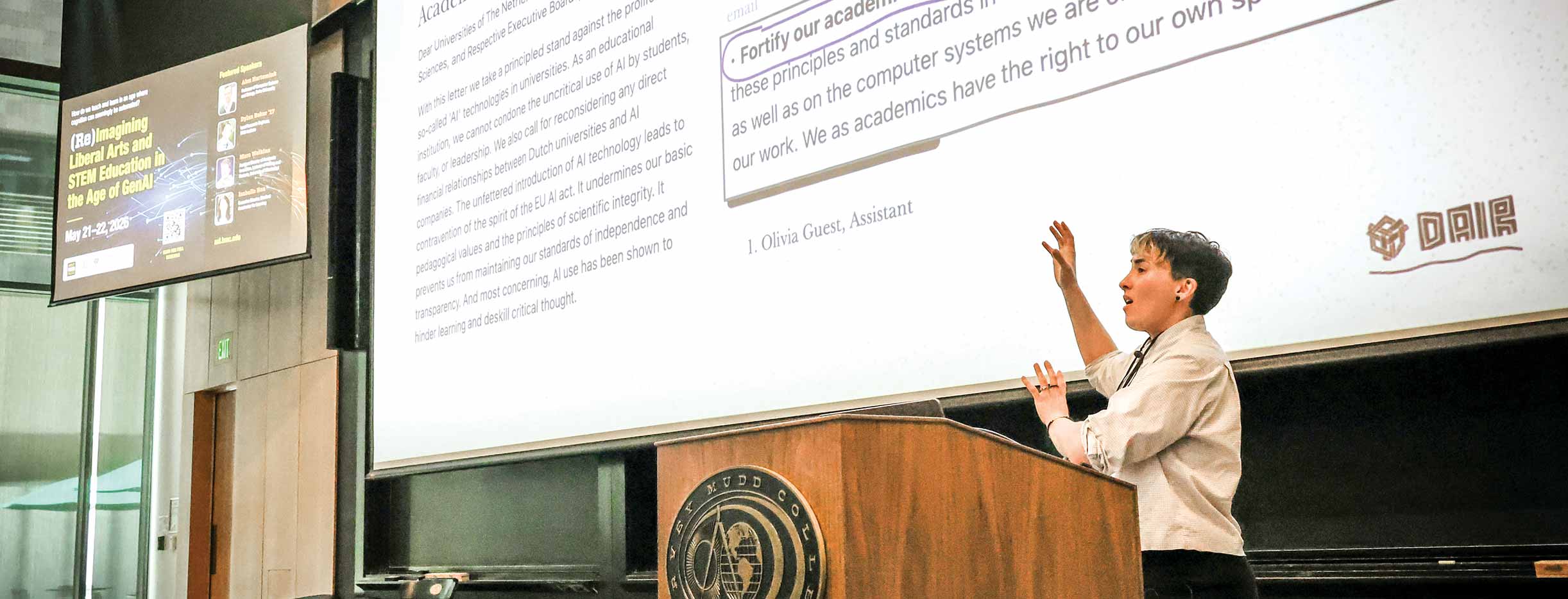
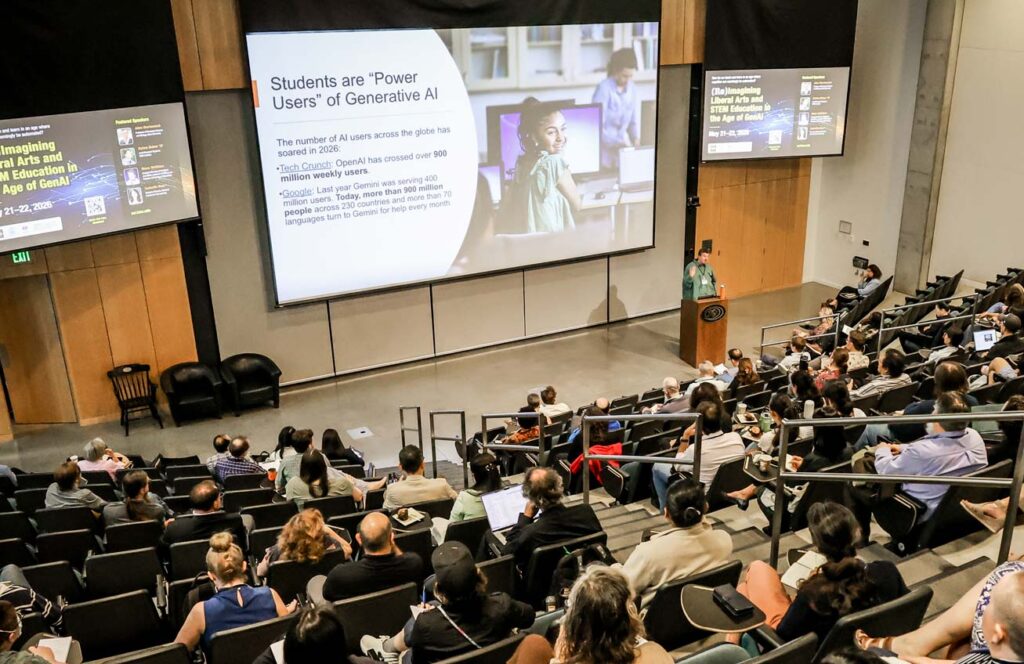
As generative AI shifts the landscape of higher education, the AI Experimentation Lab is leading a national conversation. In May, the lab hosted the conference “(Re) Imagining Liberal Arts & STEM Education in the Age of GenAI.” The conference featured visionaries like Dylan Baker ’17 (Distributed AI Research Institute), who challenged participants to reframe ethical AI. The goal is to create “AI-aware” teaching models that emphasize how these tools impact society, ensuring that the next generation of builders is as ethically grounded as they are technically proficient. Other presenters at the conference included Mudd faculty sharing their work from microgrants to reimagine their teaching with AI, about AI or in response to AI. During the spring, the Imaginative Prototyping Lab created a studio space for Mudd students to build AI prototypes and engage in multi-layered analyses of the impacts of their designs.
A Foundation for Success
The Thriving in STEM Lab ensures that the Harvey Mudd Core is a springboard rather than a barrier. Through summer skills previews and cohort-based tutoring, the lab builds the social and academic readiness necessary for students to participate in the rigorous curriculum. The tutoring program finished its third semester, linking 23 students with tutors. The Core Skills Preview is moving to an in-person weekly format this fall for small, selected groups of about 10 students and will include mentoring cohorts (one student and one faculty mentor partnered with each section).
Visit Innovation Accelerator to learn more.